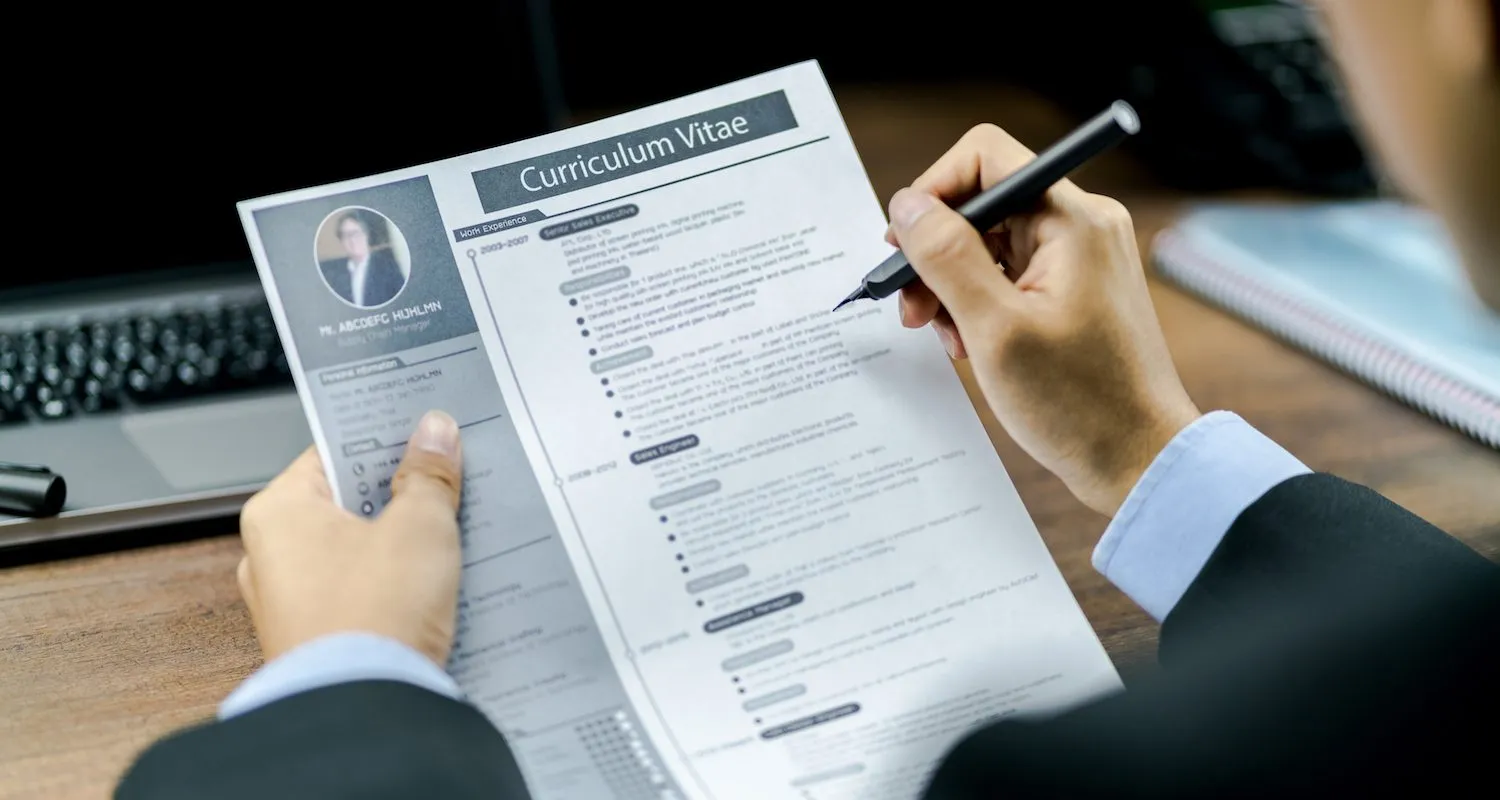
There's a version of this job that no one mentions in recruiter job descriptions.
You post a role on Monday. By Wednesday, 120 applications have come in. Your calendar is already full with interviews for three other open roles. Your hiring manager is pinging you for updates. And somewhere in that pile of 120 CVs, there are probably five or six genuinely great candidates — the ones you were hired to find.
This is the daily reality for most in-house recruiters at fast-growing companies where every team is hiring at once. The problem isn't a lack of skill. It's arithmetic. You have finite hours and the applications don't stop coming.
Here's how experienced recruiters actually handle high-volume screening, and where AI is changing the math.
First, Understand Where the Time Actually Goes
Manual CV screening time breaks down roughly like this. Opening and reading each CV takes 30 to 90 seconds for an initial pass. Cross-referencing against the job requirements takes another 30 to 60 seconds if the candidate looks promising. Making and recording a decision adds a few more seconds per candidate, and when multiplied across 100 candidates, it accumulates fast. Writing notes or rejection reasons takes about a minute per candidate if your process requires it.
At 100 applications and an average of 2 minutes per candidate, you're spending more than 3 hours just on first-pass screening. For a single role. Before you've done anything else.
Multiply that across the number of roles you're running simultaneously and it's easy to see how screening alone can consume entire working days.
What High-Volume Recruiters Do Differently
Recruiters who consistently handle large applicant pools without drowning tend to do a few things systematically.
They decide what matters before they start reading. Before opening a single CV, they define the two or three non-negotiable criteria for the role: years of relevant experience, location, specific technical skills, language requirements. Anything that's genuinely disqualifying gets applied first. This dramatically reduces the pool before any nuanced evaluation begins.
They do a two-pass review. The first pass is fast and deliberate: 15 to 20 seconds per CV, looking only for the non-negotiables. The second pass goes deeper, but only on the candidates who survived the first pass. This prevents spending four minutes on a CV that should have been rejected in twenty seconds.
They use structured criteria, not gut feeling. "This person seems like a good fit" is not a repeatable system. Good screeners develop a mental or written checklist tied to the job requirements and apply it consistently across every application.
They time-box. Rather than screening open-endedly until done, experienced recruiters often block specific time windows for the work and stop when the block ends. This prevents the cognitive depletion that comes from reading hundreds of documents in a single session.
The Honest Problem With All of This
Even with the best manual systems, there are real ceilings.
At some point, no technique will make reading 150 CVs take less time than it takes. The two-pass system helps. Structured criteria help. But if you have ten open roles and each attracts 80 applications, you're still looking at 1,200 documents that need human attention before any interview can be scheduled.
This is why AI screening has shifted from a novelty to a genuine workflow tool for recruiting teams at fast-growing companies.
How AI Screening Changes the Arithmetic
AI CV screening doesn't replace recruiter judgment. It handles the first pass automatically, and it does it in seconds rather than hours.
Here's what changes in practice.
Every CV gets read. When you're manually screening 120 applications, there's a real risk that a great candidate on page four of the applicant list gets less attention than the first ten you opened on a fresh Monday morning. AI applies the same evaluation to every application, regardless of position in the queue or what time of day it arrived.
Non-negotiables are filtered automatically. If the role requires someone based in Europe and 40 of your applicants are in the US, those 40 are flagged immediately. You never have to open those CVs at all.
You start with the best candidates. Instead of reading the pile in order of application date, you open Greenhouse or Workable and filter immediately by "Strong Yes." Your first conversation of the day is with a pre-validated strong candidate, not someone who needed to be disqualified in the first thirty seconds.
You can still review everything. AI screening is a filter, not a black box. The "Maybe" and "Missing Skills" candidates are still there if you want to check the work or if the strong pool turns out to be thin.
A Practical Weekly Workflow
Here's what a sustainable high-volume screening workflow looks like when AI is handling the first pass.
On Monday morning, spend about 15 minutes reviewing the weekend's applications. Filter by "Strong Yes" in your ATS. You're looking at a curated shortlist, not a firehose. Open calendars for promising candidates.
Tuesday through Thursday, conduct first-round calls or screen conversations with Strong Yes candidates. Meanwhile, AI is processing any new applications as they arrive, so you don't have to batch-process at the end of the week.
On Friday, spend 30 minutes reviewing "Maybe" candidates from the week. These are the edge cases: candidates who met most criteria but not all. Make human judgment calls on the ones worth a conversation.
Throughout the week, reject "Not in Location" and "Missing Skills" candidates in bulk. They've already been flagged. You're just confirming the decision and sending rejection emails.
The total time spent on screening for a 100-application role drops from 3 to 4 hours to 45 to 60 minutes of actual human decision-making, focused entirely on candidates worth the attention.
What This Means for Candidate Experience
There's a less-discussed benefit to faster screening: candidates don't wait as long.
When manual screening takes three days because you're juggling five other roles, strong candidates sit in limbo. Some of them are interviewing elsewhere. Some accept other offers. The ones who don't hear back in a reasonable window start forming an opinion about your company.
When AI screens applications in real time as they arrive, rather than in a Monday morning batch, strong candidates can be contacted within hours of applying. That speed is increasingly a competitive advantage for employer brand.
The Burnout Piece
Let's be direct about something: manual CV screening is one of the most cognitively draining parts of a recruiting job, and it's usually not what people got into recruiting to do.
Recruiters who are good at their jobs tend to be energized by conversations with candidates, by understanding what makes someone genuinely excellent, by helping teams make great hires. None of that happens while reading CVs.
The AI doesn't care about burnout. It screens CVs at 2am without losing focus. The human energy you save on triage is energy you can spend on the parts of recruiting that actually require a human: building relationships, selling the company, calibrating with hiring managers, negotiating offers.
That's not a small thing. That's the job.
Getting Started
If you're screening more than 50 CVs per week across your open roles, AI screening will likely save you several hours per week within the first month.
Seeker integrates directly with Greenhouse and Workable, processes applications in real time as they come in, and tags candidates in your ATS automatically. Setup takes about 10 minutes.
Book a demo to see it running with a live job description from your current pipeline.